Can Dogs Eat Popcorn? Benefits, Risks & Safety Tips
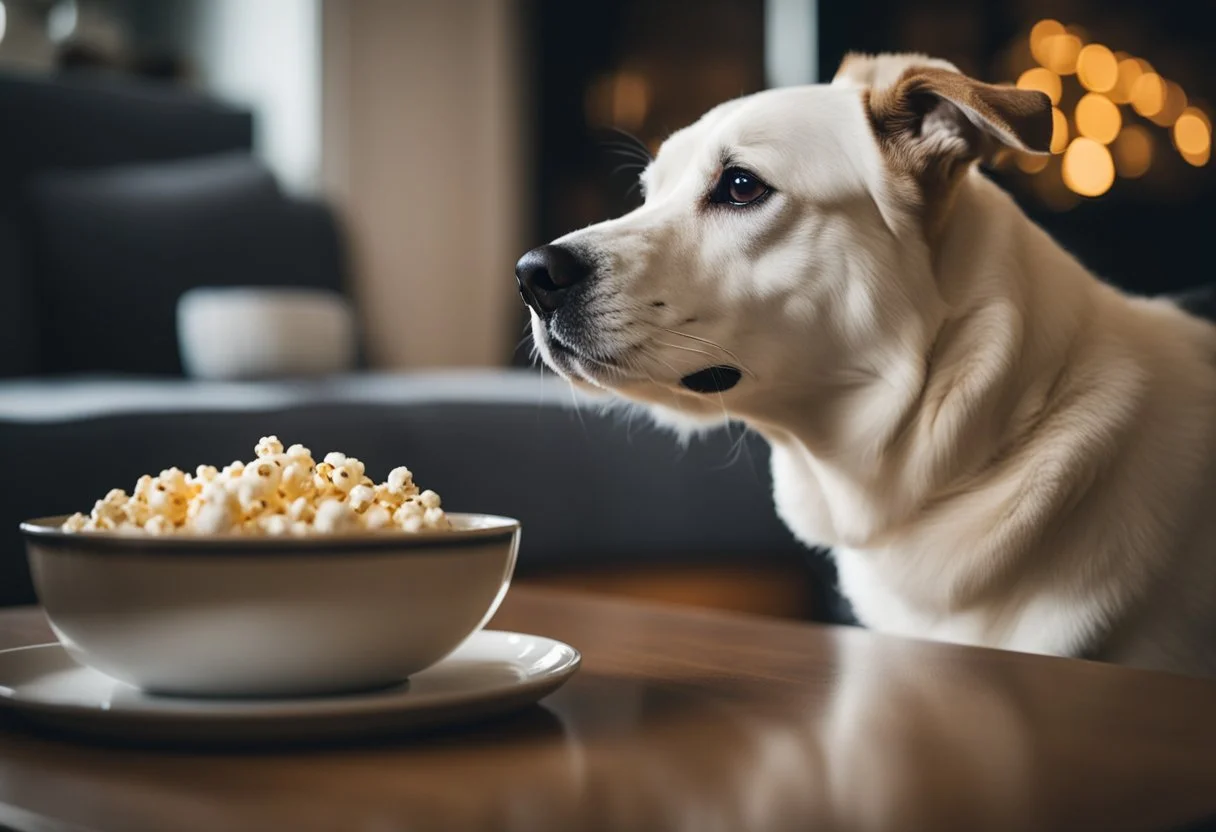
Your dog stares at you during movie night. The popcorn bowl sits between you. So, can dogs eat popcorn safely, or should you keep the bowl to yourself?
The short answer: dogs can eat popcorn, but only in a specific way. Plain popcorn is safe for dogs in small amounts. However, buttered, salted, or flavored popcorn is not.
Popcorn itself isn’t toxic. But most toppings and add-ins turn it into a risk. In addition, kernels can choke dogs or block their gut.
This guide breaks down every version of popcorn so you know exactly when dogs can eat popcorn and when they can’t. You’ll learn what’s safe, what’s dangerous, and how much your dog can eat. We’ll also cover puppies, warning signs, and the safest way to share this snack.

Key Takeaways
- Dogs can eat popcorn, but only plain and air-popped, in small amounts.
- Butter, salt, caramel, and cheese toppings make popcorn unsafe.
- Unpopped kernels and cob pieces are choking and blockage hazards.
- Small breeds, flat-faced breeds, and puppies face higher risks.
- Call your vet if your dog shows choking signs or ongoing diarrhea.
Can Dogs Eat Popcorn? (Quick Answer)
Yes, dogs can eat popcorn. Specifically, plain, air-popped popcorn is safe in small amounts.
However, skip the butter, salt, and flavorings. These additives cause the real health issues, not the popcorn itself.
Therefore, treat popcorn as an occasional snack, not a regular part of your dog’s diet. A few pieces are fine, but a whole bowl is not.
Overall, popcorn safety comes down to three things: how it’s made, what’s added, and how much your dog eats.
Popcorn Nutrition: What’s Actually Inside
Popcorn isn’t a health food for dogs. But plain popcorn isn’t empty junk either. Here’s what it actually offers.
Corn, Fiber, and Minor Nutrients
Popcorn is a whole grain made from corn kernels. Specifically, plain popcorn contains fiber, small amounts of protein, and trace minerals like manganese and magnesium.
It also has polyphenols, plant compounds linked to antioxidant activity. In fact, the American kennel club notes that plain popcorn can offer minor nutritional value for dogs.
Still, none of this makes popcorn essential to your dog’s diet. Their regular dog food already covers these nutrients better.
Real Benefits vs. Empty Snack
Fiber supports digestion and can help dogs feel full. That’s the main benefit plain popcorn offers.
Beyond that, though, popcorn is mostly filler. It’s low in the fat and protein dogs actually need. So, think of it as a light snack, not a nutritional boost.
Corn Allergies in Dogs
Some dogs are allergic to corn. Symptoms include itchy skin, ear infections, and stomach upset.
That said, corn allergies are less common than allergies to beef, dairy, or chicken. Still, they do happen.
Because of this, watch your dog closely the first time they try popcorn. Stop feeding it if you notice scratching, redness, or digestive issues. Talk to your vet if symptoms continue.
Can Dogs Eat Plain Popcorn?
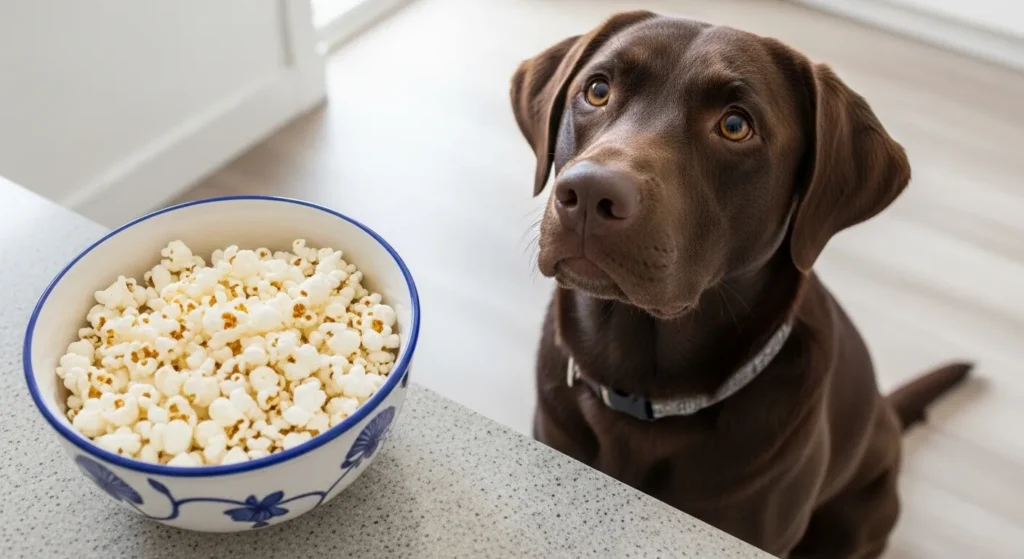
Yes, plain popcorn is the only version you should share with your dog. No butter, no salt, and no seasoning.
Specifically, plain popcorn means air-popped kernels with nothing added. This is the safest form for your dog to eat.
For best results, cook it yourself to control every ingredient. Store-bought “plain” popcorn can still contain hidden oils or salt, so check the label first.
Also, let the popcorn cool before offering it, since warm kernels can burn your dog’s mouth.
Even so, stick to a small handful. Even plain popcorn is empty calories in large amounts, and it can lead to an upset stomach.
In short, plain popcorn is the baseline. Every other version on this list adds risk.
Popcorn Toppings & Flavors — What’s Safe and What’s Not?
Plain popcorn is fine, but everything you add to it changes the story. Here’s how common toppings affect your dog.
Buttered Popcorn: Fat and Pancreatitis Risk
Buttered popcorn isn’t good for dogs. Because butter is high in fat, dogs struggle to digest it well.
As a result, too much fat can trigger pancreatitis, a painful inflammation of the pancreas. VCA animal hospital lists high-fat foods as a common pancreatitis trigger in dogs.
That said, one or two pieces of lightly buttered popcorn likely won’t hurt a healthy dog. But regular servings raise real health risks over time.
Salted Popcorn: How Much Sodium Is Too Much
Salted popcorn isn’t safe in large amounts, since dogs need far less sodium than humans do.
For instance, too much salt can cause excessive thirst, vomiting, and in severe cases, sodium poisoning. Small dogs, in particular, face higher risk from the same amount of salt.
Still, a few lightly salted pieces are unlikely to cause harm. A whole bag of movie theater popcorn, however, is a different story.
Caramel Popcorn and Kettle Corn: Sugar Overload
It’s best to skip caramel popcorn and kettle corn entirely, since both are loaded with added sugar.
Sugar offers no nutritional benefit to dogs. Instead, it can cause diarrhea, upset stomach, and contribute to obesity and dental problems over time.
Worse still, kettle corn combines sugar and salt, doubling the risk. Neither option belongs in your dog’s bowl.
Cheese and Cheddar Popcorn: Why the Coating Is the Problem?
Cheese and cheddar popcorn aren’t safe choices either, since both are high in fat, salt, and often include milk-based powders.
In particular, white cheddar popcorn is often worse. Its powder coating packs in extra sodium and artificial flavoring compared to standard cheddar.
Additionally, many dogs are lactose intolerant. As a result, cheese-flavored coatings can trigger diarrhea and stomach upset even in small amounts.
Ultimately, the seasoning powder itself is the real problem. It’s concentrated salt and fat, not real cheese in most cases.
Popular Popcorn Brands: Which Ones Are Safer for Dogs?
Store-bought popcorn varies a lot by brand. Here’s how three popular options stack up when considering whether dogs can eat popcorn from a bag.
SkinnyPop Popcorn
Original SkinnyPop is one of the safer bagged options, since it’s made with just popcorn, sunflower oil, and salt.
That said, the salt content is still a concern in large amounts, though a few pieces are fine for most dogs.
However, skip the flavored varieties like white cheddar or sea salt and pepper, as these add extra fat, sodium, or spices your dog doesn’t need.
Smartfood Popcorn
Smartfood popcorn isn’t a good choice for dogs. The classic white cheddar flavor is high in fat, salt, and cheese powder.
Consequently, this combination raises the risk of an upset stomach and diarrhea. It’s best kept out of your dog’s reach entirely.
Microwave Popcorn: Why It’s the Riskiest Bagged Option?
Microwave popcorn should be avoided, since most brands coat the kernels in butter, oil, and salt before popping.
Additionally, some bags contain diacetyl, a flavoring chemical linked to health concerns. The ASPCA advises caution with heavily processed, flavored snack foods for pets.
For this reason, air-popped popcorn is always the safer alternative to anything microwaved.
Ingredient Label Red Flags to Check First
Always flip the bag over before sharing. Specifically, watch for these red flags:
- Added oils high on the ingredient list
- Salt or sodium listed in the first few ingredients
- Artificial flavoring or “seasoning blend”
- Sugar, corn syrup, or caramel coating
- Onion or garlic powder, both toxic to dogs
Generally, if the ingredient list has more than three items, treat it as a red flag. Simple is safer.
Popcorn Shrimp Isn’t Popcorn — Here’s the Difference
Popcorn shrimp isn’t the same food as popcorn at all. Rather, it’s fried, breaded shrimp shaped into small pieces.
Because it contains oil, batter, and often salt or seasoning, this combination is hard for dogs to digest.
Furthermore, fried foods raise the risk of pancreatitis in dogs. The breading also adds empty carbs with no real benefit.
Even so, if your dog grabs a piece off your plate, don’t panic. One bite likely won’t cause harm — just don’t make it a habit.
The Hidden Dangers of Popcorn
Toppings aren’t the only risk. The kernels themselves can cause physical harm, not just an upset stomach.
Unpopped Kernels: A Real Choking Hazard
Unpopped kernels are dangerous for dogs, since they’re hard, small, and easy to swallow whole.
As a result, these kernels can lodge in your dog’s throat, creating a choking hazard, especially in small dogs.
Additionally, swallowed kernels can get stuck in the intestines. This may cause a blockage that needs surgery to fix.
Therefore, always check your popcorn bowl for unpopped kernels before sharing.
Corn Cob Pieces: Intestinal Blockage Risk
Never give your dog a corn cob. This rule includes small pieces, not just the whole cob.
Because cob pieces don’t break down in a dog’s stomach, they can block the intestines completely.
Consequently, blockages are a medical emergency, and vets often need to perform surgery to remove the cob. The AKC lists corn cobs as a leading cause of intestinal blockage in dogs.
Kernel Hulls Stuck in Teeth and Gums
Popcorn hulls are the thin, papery bits left after popping. Often, they get stuck between a dog’s teeth and gums.
This can cause gum irritation, discomfort, or minor infections. As a result, dogs may paw at their mouth or refuse food.
So, check your dog’s mouth after they eat popcorn, and remove any visible hulls you find.
Small and Flat-Faced Breeds Face Higher Risk
Small breeds face higher choking risk from kernels and hulls, since their airways are simply smaller.
Similarly, flat-faced breeds, like Pugs and Bulldogs, also face added risk. Their short airways make choking and breathing issues more likely.
For this reason, if you own a small or flat-faced breed, it’s best to skip popcorn altogether.
How Much Popcorn Can a Dog Eat?
Portion size depends on your dog’s weight, since bigger dogs can handle more than smaller ones.
Portion Guide by Dog Size
- Small dogs (under 20 lbs): 3-5 plain pieces
- Medium dogs (20-50 lbs): 6-10 plain pieces
- Large dogs (over 50 lbs): up to a small handful
Note that these amounts apply to plain, air-popped popcorn only. So, cut portions in half for any flavored version you choose to allow.
How Often Popcorn Should Show Up in Your Dog’s Diet?
Popcorn should stay an occasional treat. Generally, once or twice a week is a reasonable limit.
Otherwise, daily popcorn adds unnecessary calories to your dog’s diet, and it can crowd out more nutritious treats.
Instead, save popcorn for movie nights or special moments, rather than making it part of your dog’s regular routine.
Popcorn and Puppies: Why Timing Matters
Puppies face higher risk than adult dogs, since their digestive systems are still developing.
For example, small kernels pose a bigger choking hazard for young pups, because their throats are smaller and narrower.
Additionally, puppies have more sensitive stomachs. As a result, even plain popcorn can trigger diarrhea or an upset stomach.
Therefore, wait until your puppy is fully grown before introducing popcorn, and ask your vet when it’s appropriate to start.
Signs of a Problem After Your Dog Eats Popcorn
Watch your dog closely after they eat popcorn, since most issues show up within a few hours.
Mild Symptoms: Upset Stomach and Diarrhea
Common mild symptoms include:
- Diarrhea
- Vomiting
- Gas or bloating
- Reduced appetite
Typically, these symptoms pass within a day. In the meantime, offer plenty of water and hold off on treats until your dog feels better.
Serious Symptoms That Need a Vet
Call your vet immediately if you notice:
- Persistent vomiting
- Loss of appetite lasting more than a day
- Visible pain or a bloated belly
- Lethargy or unusual weakness
- Straining to pass stool
Because these signs may point to a blockage, they require fast medical attention.
What to Do If Your Dog Is Choking?
First, stay calm and check your dog’s mouth, removing any visible kernel or piece you can safely reach.
If your dog can still cough or breathe, let them try to clear it alone. Meanwhile, don’t reach deep into their throat.
However, if your dog can’t breathe or is panicking, perform a modified Heimlich maneuver. Afterward, the AVMA recommends contacting your vet or an emergency animal hospital right away, even after the object is removed.
The Healthiest Way to Share Popcorn With Your Dog
Sharing popcorn safely comes down to preparation. So, follow these steps every time.
Step-by-Step: Air-Popped, Plain, Cooled, Portioned
- Air-pop the popcorn without oil or butter.
- Skip all salt, seasoning, and flavoring.
- Let the popcorn cool completely.
- Check for unpopped kernels and remove them.
- Measure a portion based on your dog’s size.
- Watch your dog while they eat it.
Simple Homemade Dog-Safe Popcorn Recipe
What you need:
- 1/4 cup plain popcorn kernels
- An air popper or stovetop pot
Steps:
- Pop the kernels using an air popper, or in a covered pot with no oil.
- Let the popcorn cool for five minutes.
- Sort through and remove any unpopped kernels.
- Serve a small handful based on your dog’s size.
Overall, this version skips every risky ingredient, making it the safest way to include your dog in snack time.
Final Verdict: Can Dogs Eat Popcorn?
Yes, dogs can eat popcorn safely, with the right precautions. Specifically, plain, air-popped popcorn in small amounts is fine for most dogs.
However, skip butter, salt, sugar, and cheese coatings, since these additives cause most popcorn-related health issues.
Also, watch out for unpopped kernels and cob pieces, as these create real choking and blockage risks regardless of the flavor.
In summary, when in doubt, keep it plain, keep it small, and keep an eye on your pup while they eat.
Frequently Asked Questions
Can dogs eat popcorn with butter?
Buttered popcorn is high in fat and can trigger pancreatitis in dogs, so it’s best avoided.
Can dogs eat caramel popcorn?
Caramel popcorn contains added sugar, which can cause diarrhea and long-term health issues, so skip it.
Can dogs eat popcorn kernels?
Unpopped kernels are a choking hazard and can cause an intestinal blockage, so always remove them first.
Can dogs eat popcorn shrimp?
Popcorn shrimp is fried and battered, unrelated to popcorn, and hard for dogs to digest.
Can dogs eat microwave popcorn?
Most microwave popcorn contains butter, oil, salt, and sometimes diacetyl, a flavoring chemical of concern.
Can puppies eat popcorn?
It’s best to wait, since puppies have sensitive stomachs and a higher choking risk than adult dogs.
Is popcorn a choking hazard for dogs?
Yes, since unpopped kernels and cob pieces pose the biggest choking risk, especially for small breeds.
Are dogs allergic to corn or popcorn?
Some dogs are, so watch for itchy skin, ear infections, or stomach upset after their first taste.