Can Dogs Eat Carrots? A Guide to Benefits, Risks & Portions
Your dog crunches along while you chop vegetables for dinner. Can dogs eat carrots, or should you keep them off the cutting board?
Yes. Dogs can eat carrots, raw or cooked, if they’re plain and cut into bite-sized pieces. Carrots are cheap, low in calories, and easy to find. That makes them one of the simplest human foods to share.
Preparation still matters. Whole carrots and round baby carrots can choke small dogs. Seasoned or glazed carrots can cause real problems.
This guide covers the benefits, raw versus cooked, safe portions, and the carrot dishes to skip.
Key Takeaways
- Plain raw or cooked carrots are safe for most dogs.
- Choking is the biggest risk, especially for small dogs and puppies.
- Cut carrots into small pieces, and cook them for seniors or dogs with dental problems.
- Skip butter, salt, glazes, onion, garlic, and carrot cake.
- Carrots count toward your dog’s daily treat limit, so keep portions modest.
Can Dogs Eat Carrots? (Quick Answer)
Yes, dogs can eat carrots. Plain raw or cooked carrots are safe for most dogs in small, bite-sized pieces. Skip butter, salt, glazes, onion, and garlic. Cut carrots smaller for small dogs and puppies to prevent choking. Treat carrots as a snack that counts toward the daily treat limit.
Are Carrots Good for Dogs?
Yes, in the right form. Beyond the basic question of can dogs eat carrots, the next one is whether they actually help. They add crunch and a little nutrition for very few calories.
Beta-Carotene and Vitamin A
Carrots get their orange color from beta-carotene. The body converts it to vitamin A, which supports vision, skin, and immune function.
Fiber
Carrots contain fiber that supports digestion. A small amount may help firm up loose stool. Too much has the opposite effect, so portions matter.
A Low-Calorie Treat
A few carrot pieces carry far fewer calories than most store-bought treats. Chewy’s pet nutrition guide describes carrots as a healthy, low-calorie option. That makes them a useful swap for dogs on a weight plan.
Dental Benefits: What’s Realistic
Some sources say chewing raw carrots may help scrape plaque from teeth. The crunch can’t replace brushing or professional dental care. Think of it as a small bonus, not a dental plan.
Raw vs. Cooked Carrots
Can dogs eat carrots raw and cooked? Both work. The best choice depends on your dog’s age, teeth, and chewing style.
| Method | Best For | Watch Out For |
|---|---|---|
| Raw | Dogs that chew well and love crunch | Choking and blockage if pieces are too big |
| Cooked (steamed, boiled, or roasted, plain) | Puppies, seniors, and dogs with dental problems or sensitive stomachs | Butter, oil, salt, and seasoning |
Can Dogs Eat Raw Carrots?
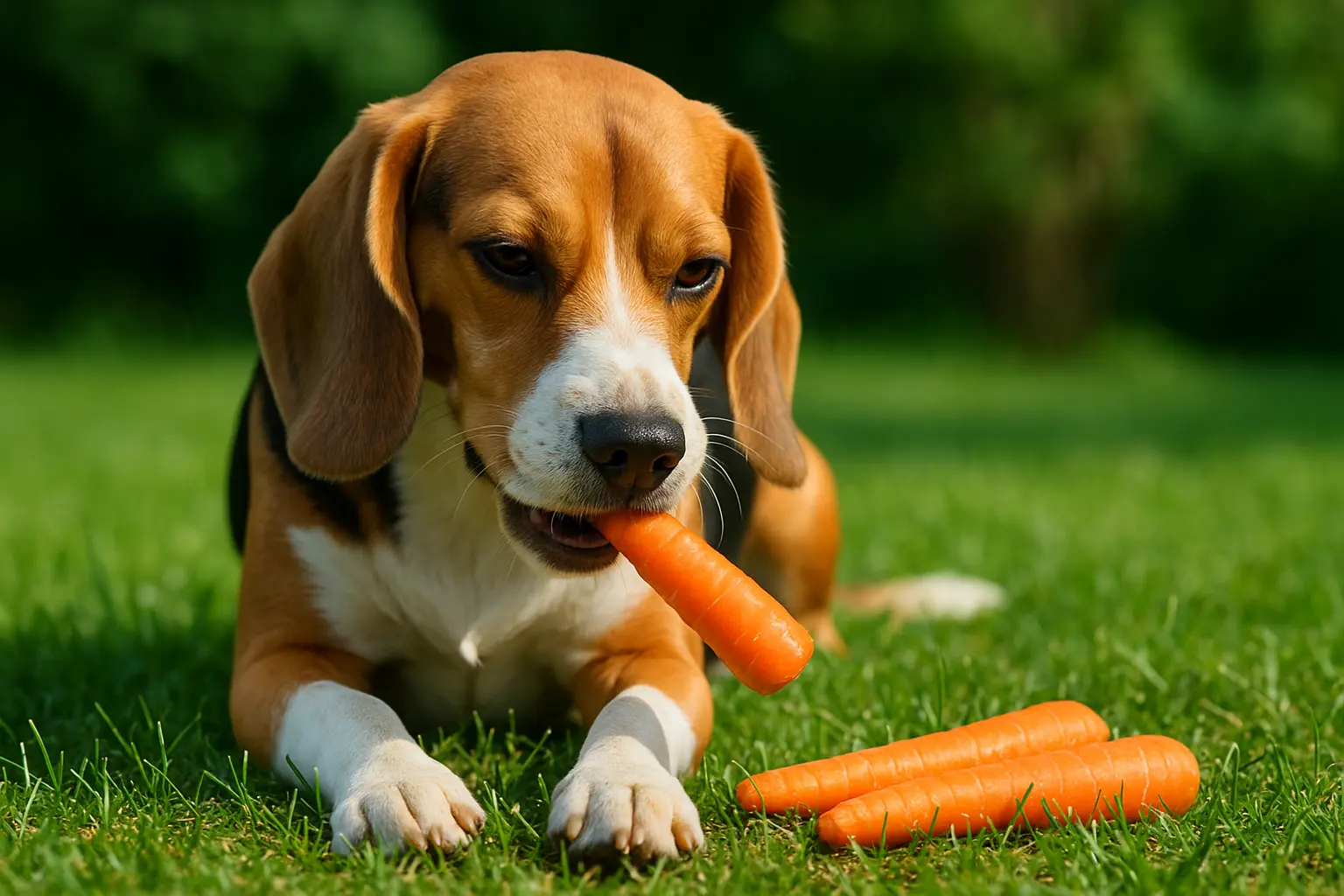
Yes. Raw carrots are safe when washed and cut into small pieces. Large dogs that chew well may handle a whole carrot under supervision. Cutting it up is the safer default.
Can Dogs Eat Cooked Carrots?
Yes. Cooked carrots are softer and easier to chew and digest. Chewy points out that this helps senior dogs and dogs with dental issues. Some sources add that cooking may help dogs absorb nutrients, since raw carrots contain tough plant fiber.
Steam, boil, or roast carrots plain. Add nothing.
Can Dogs Eat Baby Carrots, Carrot Sticks, Shavings, or a Whole Carrot?
Baby carrots are regular carrots cut and shaped into small pieces, so they’re safe. Their round shape can slip down a small dog’s throat, though.
PetPress notes that whole baby carrots, big chunks, and thick coin-shaped slices can all lodge in a throat. For small dogs, serve thin strips, grated carrot, or small dice. Cut carrot sticks to a size your dog can’t gulp whole.
Carrot shavings and grated carrot are among the safest forms. Peel a carrot into thin shavings, then sprinkle a little over your dog’s meal. A whole carrot suits only large dogs that chew well, and only with supervision.
Can Dogs Eat Carrot Tops and Skin?
Yes, in small amounts. The leafy tops and the skin are both considered safe. Taste of the Wild says dogs can eat the greens, the skin, and the carrot itself. Wash everything well or peel the carrot first.
Chop the tops finely. Long, stringy greens can cause gagging in some dogs.
Can Dogs Eat Purple, Yellow, or Other Colored Carrots?
Yes. Purple, yellow, and white carrots are carrots too, and they follow the same rules as orange ones. Can dogs have carrots in other colors? Yes. Wash them, cut them small, and serve them plain.
Don’t assume every carrot-like plant is safe. Wild plants such as poison hemlock can resemble wild carrot, and hemlock is highly toxic. Stick to carrots you bought or grew yourself, and never feed foraged plants.
Can Dogs Eat Frozen Carrots?
Sometimes. Can dogs eat carrots straight from the freezer? Frozen carrots are a popular summer treat and a common pick for teething puppies. Guidance on them differs, though.
Very hard frozen pieces can be tough on teeth and can become a choking hazard. If you try frozen carrot, use small, thin pieces and supervise your dog. Ask your vet first for puppies and small breeds.
Can Dogs Eat Carrots Mixed With Other Vegetables?
Mixed vegetable dishes work when every ingredient is plain and dog-safe. The extras decide the answer.
Peas and Carrots
Yes, in small amounts. Plain fresh or frozen peas and carrots make a safe combination. Canned mixes often contain added salt, so rinse them or choose fresh. Skip any mix with butter, seasoning, onion, or garlic.
Celery and Carrots
Yes, in small amounts. Celery is safe when chopped into short pieces. Long, stringy stalks can cause gagging, so cut celery small, just like carrots.
Boiled Potatoes and Carrots
Yes, in small amounts, when both are plain. Boil them without butter, salt, or oil. Skip raw potatoes and green or sprouting potatoes, which contain a toxic compound called solanine.
Carrot Dishes and Products to Skip
The carrot isn’t the problem here. What gets added to it is.
Glazed, Buttered, or Seasoned Carrots
Skip carrots cooked with butter, oil, salt, honey, or brown sugar. Chewy warns that carrots cooked with onion or garlic are harmful to dogs. Both onion and garlic are toxic.
Canned Carrots
Canned carrots often contain added salt or sugar. Fresh or frozen plain carrots are a better choice. If you only have canned, drain and rinse them well.
Carrot Juice
Juicing removes most of the fiber and leaves a concentrated hit of sugar. Whole carrot pieces and fresh water are better for your dog.
Carrot Cake
Skip it. Carrot cake carries sugar, frosting, and often raisins or nuts. Raisins are toxic to dogs, and some nuts are too. Check any “sugar-free” version for xylitol, which is highly toxic.
Risks of Feeding Carrots to Dogs
Can dogs eat carrots without any risk at all? Almost. Three issues are worth knowing.
Choking and Blockage
This is the main risk. Large raw pieces, whole baby carrots, and coin slices can lodge in the throat. Small dogs, puppies, and fast eaters face the highest risk. Always cut carrots to the right size and stay nearby while your dog eats.
Too Much Fiber and Sugar
Carrots contain natural sugar and plenty of fiber. Too many at once can cause gas, loose stool, or an upset stomach. Pawlicy also cautions that too much fiber and sugar can lead to unwanted side effects.
Allergies
True carrot allergies are rare. Watch for itching, swelling, or digestive upset after a first taste. Stop feeding carrots if you notice a reaction.
Can Dogs With Diabetes Eat Carrots?
Only with your vet’s guidance. Carrots contain natural sugar, and dogs with diabetes need steady, controlled intake. Cooking can make carrot sugars easier to absorb, so raw carrot tends to be gentler. Your vet can tell you whether a small portion fits your dog’s plan.
Can Dogs Eat Carrots Every Day?
Many healthy dogs tolerate a few carrot pieces most days. Daily carrots aren’t necessary, though. Keep them inside the 10% treat limit, and watch for loose stool. Dogs on prescription diets or weight-loss plans should follow their vet’s advice.
How Many Carrots Can a Dog Eat?
Portion size depends on your dog’s weight. Chopped baby carrots make an easy measuring unit.
Portion Guide by Dog Size
| Dog Size | Weight Range | Portion (Chopped Baby Carrots) |
|---|---|---|
| Extra small and small | Under 20 lb | ½-1 baby carrot |
| Medium | 20-50 lb | 2-3 baby carrots |
| Large | 50-90 lb | 3-4 baby carrots |
| Extra large | 91+ lb | 4-5 baby carrots |
These figures are general estimates, not a veterinary prescription. Your dog’s calorie needs, activity level, and health status may differ. Count carrots toward the 10% treat rule. Treats should make up no more than 10% of daily calories.
Can Puppies Eat Carrots?
Yes, once they’re eating solid food. Cooked, mashed, or finely diced carrot is the easiest for small mouths. Taste of the Wild notes that carrots may even help teething puppies feel better.
Puppies choke more easily than adult dogs, so keep pieces tiny. See the frozen carrot section above before offering anything hard.

Can Senior Dogs or Dogs With Dental Problems Eat Carrots?
Yes, in cooked form. Soft, steamed carrot is gentler on sore gums and worn teeth than a raw crunch. Mash it lightly if chewing is difficult.
What If My Dog Ate Too Many Carrots?
Stay calm. Carrots aren’t toxic, so overeating is uncomfortable rather than dangerous for most dogs.
Expect possible gas, loose stool, or an upset stomach from the extra fiber and sugar. Offer fresh water and skip more treats for the rest of the day. Keep regular meals going unless your vet says otherwise.
Call your vet if vomiting or diarrhea lasts over a day, or the belly looks swollen or painful. Call right away if your dog swallowed large chunks, a whole carrot, carrot cake, or glazed carrots. The ASPCA Animal Poison Control Center can help if you can’t reach your vet. A fee may apply.
Signs of a Problem After Your Dog Eats Carrots
Mild Symptoms
- Gas
- Loose or soft stool
- Mild stomach upset
These usually pass within a day. Cut back the portion or pause carrots for a few days.
Serious Symptoms
Call your vet right away if you notice:
- Gagging, pawing at the mouth, or trouble breathing (a choking emergency)
- Repeated vomiting
- Belly pain, a swollen belly, or straining to pass stool
- Swelling or hives
- Lethargy that lasts more than a day
PetPress stresses that choking or breathing trouble isn’t something to wait out. Contact your vet or an emergency animal hospital immediately.
How to Safely Prepare Carrots for Your Dog
Step 1: Wash and Trim
Rinse the carrot well. Trim the ends, or peel it if you prefer.
Step 2: Cut to Fit Your Dog
Slice into thin strips or small dice. Go smaller for small dogs, puppies, and fast eaters.
Step 3: Cook If Needed
Steam or boil for seniors, puppies, and dogs with dental problems. Keep it plain.
Step 4: Start Small
Offer a few pieces the first time. Watch for stomach upset over the next day.
Simple Steamed Carrot Topper
What you need:
- 1 medium carrot
- Water for steaming
Steps:
- Wash the carrot and cut it into small dice.
- Steam until soft enough to mash with a fork. Time varies with piece size.
- Let it cool completely.
- Spoon a small amount over your dog’s regular food.
The Bottom Line
Can dogs eat carrots? Yes. Plain carrots, raw or cooked, make a safe, low-calorie snack for most dogs. Cut them small, skip the seasonings, and keep portions modest.
Choking is the main risk. Pay extra attention with small dogs, puppies, and dogs that gulp. If your dog has diabetes or a prescription diet, check with your vet first.
This article is general information, not a substitute for individual veterinary advice. If your dog is choking or seems ill, contact your vet or an emergency animal hospital right away.
Frequently Asked Questions
Can dogs eat carrots?
Yes, plain raw or cooked carrots are safe for most dogs when cut into small pieces.
Can dogs have carrots?
Yes. The guidance is the same whether you ask about eating or having carrots: plain, small pieces, modest portions.
Are carrots good for dogs?
Yes. They offer fiber, beta-carotene, and very few calories, as long as portions stay modest.
Can dogs eat raw carrots?
Yes, as long as the carrots are washed and cut small enough to prevent choking.
Can dogs eat cooked carrots?
Yes. Plain steamed, boiled, or roasted carrots are softer and ideal for seniors and puppies.
Can dogs eat baby carrots?
Yes, but cut them for small dogs. Their round shape can lodge in a small throat.
Can dogs eat carrot tops?
Yes, in small, finely chopped amounts. Wash them well first.
Can dogs eat frozen carrots?
Sometimes. Very hard pieces can hurt teeth or cause choking, so use small, thin pieces and ask your vet first.
Can dogs eat carrots every day?
Many dogs handle a few pieces most days. Keep carrots within the 10% treat limit and watch for loose stool.
Can puppies eat carrots?
Yes, in tiny, cooked or finely diced pieces once they’re eating solid food.
Can dogs with diabetes eat carrots?
Only with your vet’s guidance, since carrots contain natural sugar.
How many carrots can a dog eat?
It depends on size. See the portion guide above, from half a baby carrot to about five.
Are carrots bad for dogs?
No, not in normal amounts. Plain carrots are safe. The risks come from choking, overfeeding, and added ingredients like butter, onion, or garlic.
Can dogs eat steamed carrots?
Yes. Plain steamed carrots are soft and easy to digest, which suits puppies and seniors.
Can dogs eat canned carrots?
Only if drained and rinsed, since canned carrots often contain added salt or sugar. Fresh or frozen plain carrots are better.
Can dogs eat purple or yellow carrots?
Yes. Colored carrots follow the same rules as orange ones. Wash them, cut them small, and serve them plain.
Can dogs eat carrot sticks or shavings?
Yes. Cut sticks small, and sprinkle thin shavings over meals. Shavings are one of the safest forms.
Can dogs eat peas and carrots together?
Yes, in small amounts, when plain. Rinse canned mixes and skip any with butter, onion, or garlic.
Can dogs eat celery and carrots together?
Yes, in small amounts. Chop celery short to prevent gagging on stringy pieces.
Can dogs eat carrots with the skin on?
Yes. The skin is safe. Wash the carrot well or peel it first.
What happens if a dog eats too many carrots?
Usually gas, loose stool, or an upset stomach from extra fiber and sugar. Offer water, and call your vet if symptoms last over a day.