
Can Dogs Eat Peanuts? Safety, Benefits & How Much to Serve
Quick Answer
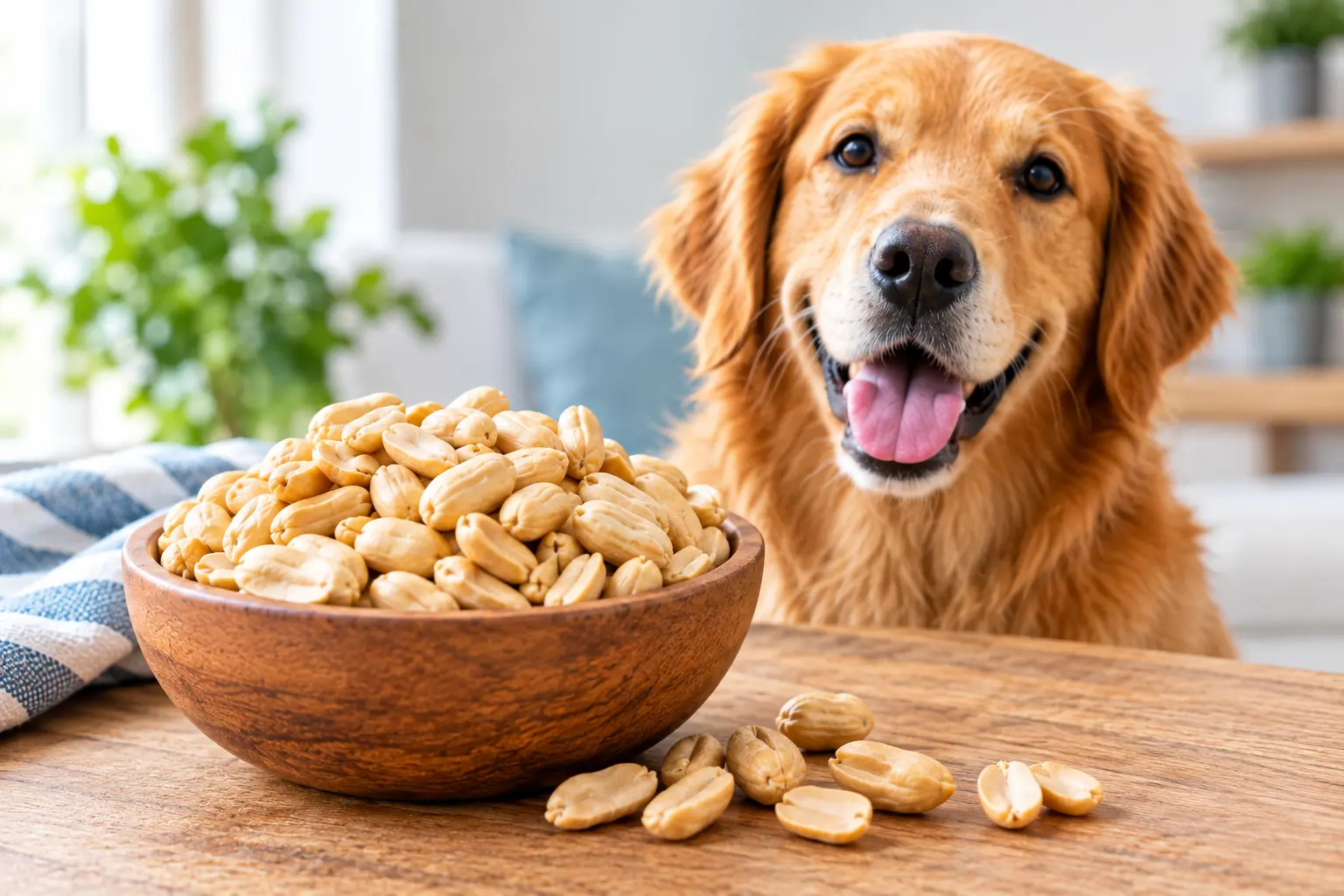
Yes, dogs can eat peanuts. Plain, unsalted, dry-roasted or raw peanuts are safe in small amounts. Skip the shell, salt, and flavored varieties. Peanuts are high in fat, so moderation matters most.
Are Peanuts Safe for Dogs?
Peanuts are not toxic to dogs. Technically, peanuts are legumes, not tree nuts, which is part of why they’re safer than options like macadamia or walnuts.
Plain peanuts work fine as an occasional treat. The type and amount both matter more than whether peanuts are safe at all.
Stick to unsalted, unflavored peanuts only.
Nutritional Benefits of Peanuts for Dogs
Peanuts provide protein, vitamin E, niacin, and fat, but that doesn’t make them an essential part of a dog’s diet. A complete dog food already provides the nutrients your dog needs, so peanuts are better viewed as an occasional treat.
Protein helps maintain muscle, vitamin E acts as an antioxidant, and niacin supports normal metabolism. These are genuine benefits. They just aren’t ones your dog is missing out on without peanuts.
Risks of Feeding Peanuts to Dogs
Peanuts bring real risks alongside their benefits. Three concerns matter most: fat content, mold contamination, and allergic reactions.
High Fat Content and Pancreatitis
Peanuts are high in fat and calories, so eating large amounts can cause digestive upset and may contribute to pancreatitis in susceptible dogs.
Overweight or less active dogs need extra caution here. High-fat treats add up fast and can worsen weight issues.
Aflatoxin Contamination
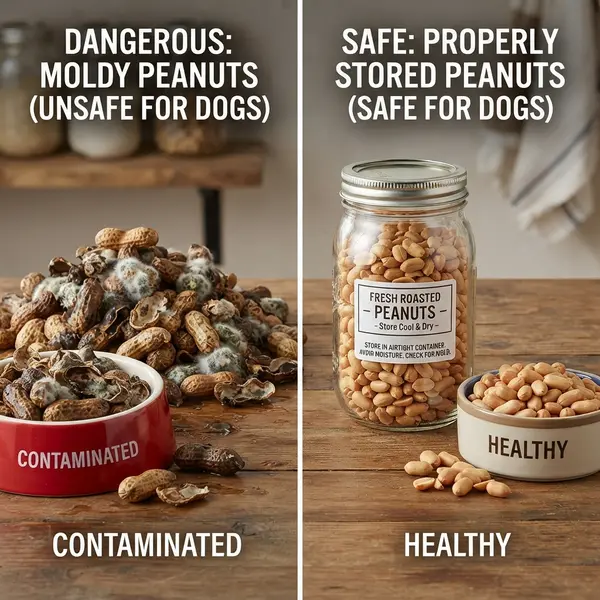
Peanuts can carry a mold byproduct called aflatoxin, especially in poorly stored batches. Aflatoxin exposure can damage a dog’s liver over time. Don’t feed peanuts that look moldy, smell musty, or have been stored improperly. Choose fresh, human-quality peanuts from a reputable source and store them according to the package instructions.
Peanut Allergies
True peanut allergies appear to be rare in dogs, but allergic reactions can occur. Watch for itching, hives, facial swelling, vomiting, or diarrhea after introducing peanuts. Facial or throat swelling or breathing difficulty requires immediate veterinary attention.
Not every digestive reaction means an allergy. Vomiting or diarrhea after eating too many peanuts can simply result from the high fat content, not an immune response.
Can Dogs Eat Peanut Shells?
No, skip the shells. They’re tough and fibrous, and dogs can struggle to break them down. This raises the risk of choking or digestive irritation, especially in smaller dogs.
Shells also offer zero nutritional value. Always remove them before offering peanuts to your dog.
Can Dogs Eat Salted or Flavored Peanuts?
No, avoid salted and flavored peanuts entirely. Extra sodium can cause excess thirst and, in large amounts, more serious sodium-related problems.
Flavored varieties bring their own dangers. Honey-roasted, spicy, and seasoned peanuts often include garlic powder, onion powder, or added sugar. These ingredients carry separate risks beyond the peanut itself.
Plain peanuts stay the only safe option to share.
Can Dogs Eat Raw or Boiled Peanuts?
Plain, shelled raw peanuts can be fed in small amounts, but dry-roasted, unsalted peanuts are a simpler choice. Raw peanuts should be fresh and properly stored, since peanuts can become contaminated with mold and aflatoxin.
Store-bought boiled peanuts commonly contain salt or seasonings and may still have shells, so they’re best skipped. If you prepare boiled peanuts yourself, keep them completely plain and remove the shells before serving.
How Many Peanuts Can Dogs Eat?
Portion size depends on your dog’s weight, but treat this as a general starting point rather than an exact rule.
| Dog size | Weight | General starting portion |
|---|---|---|
| Small | Under 20 lbs | 1-2 peanuts |
| Medium | 20-50 lbs | 2-4 peanuts |
| Large | Over 50 lbs | 4-6 peanuts |
These are general starting portions, not veterinary-prescribed amounts. Peanut calories should count toward your dog’s daily treat allowance, which experts recommend keeping under about 10% of total daily calories. Smaller portions may be appropriate for dogs that are overweight, less active, or managing a health condition.
Can Dogs Eat Peanut Butter?
Yes, in small amounts, most plain peanut butter is safe for dogs. Choose a brand with no added sugar and check the label closely.
What to look for in dog-safe peanut butter:
- No xylitol (sometimes listed as “birch sugar”)
- No chocolate
- Minimal added sugar
- Minimal added salt
- A simple ingredient list
Always confirm the peanut butter contains no xylitol. This sweetener is highly toxic to dogs, even in small doses, and can cause life-threatening blood sugar drops and liver problems. It shows up in some “natural” or sugar-free brands, sometimes under the name “birch sugar.”
A thin spread on a toy or spoon works well as an occasional treat.
Can Puppies Eat Peanuts?
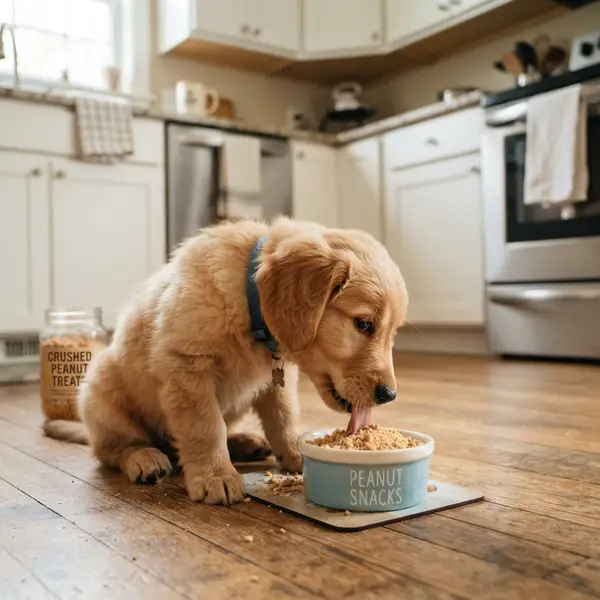
Puppies can have a small amount of plain, shelled peanuts, crushed or chopped into smaller pieces to lower the choking risk. Their mouths and stomachs are still developing, so extra caution matters.
Watch closely for any digestive reaction the first time you offer peanuts to a puppy.
How to Safely Feed Peanuts to Your Dog
Follow these steps every time:
- Choose plain, unsalted, dry-roasted or raw peanuts
- Remove the shell completely
- Check for any added seasoning or flavoring on the label
- Break or crush peanuts for small dogs and puppies
- Offer just a few at a time, not a handful
Skip honey-roasted, spicy, or seasoned varieties entirely. Plain peanuts are all your dog needs.
What to Do If Your Dog Ate Too Many Peanuts
Stay calm and follow these steps.
- Check for choking first. If your dog is struggling to breathe, repeatedly gagging, or showing signs of choking, seek emergency veterinary care immediately.
- Identify what they ate. Plain, shelled peanuts carry lower risk than salted, flavored, or unshelled ones.
- Watch for symptoms. Vomiting, diarrhea, lethargy, or stomach pain can signal a problem, especially after a large amount.
- Decide whether to call your vet. If your dog ate only a few plain, shelled peanuts and is acting normally, monitor them closely. If they ate a large quantity, swallowed shells, ate seasoned peanuts, or develop symptoms, contact your veterinarian for advice.
- Never induce vomiting on your own. Only do this if a vet or animal poison control professional specifically directs you to.
- Bring details to your vet visit. Note how many peanuts your dog ate and when.
The Bottom Line
Peanuts are a safe treat for most dogs in small amounts. Stick to plain, shelled, unsalted peanuts, dry-roasted or raw, and skip salted, flavored, and store-bought boiled varieties.
Watch portions closely for dogs prone to pancreatitis or weight gain, and keep your vet’s number handy for real concerns.
Peanuts aren’t the only human food dogs can enjoy in moderation. For another dog-friendly treat, learn Can Dogs Eat Mango? and how to serve it safely.
FAQ
Can dogs eat honey roasted peanuts? No. Honey-roasted peanuts contain added sugar and often other seasonings that aren’t safe for regular feeding.
Can dogs eat peanuts every day? No, peanuts work best as an occasional treat, not a daily habit, due to their fat content.
Are peanuts better than other nuts for dogs? Peanuts are safer than several other nuts, such as macadamia and black walnuts, which carry their own toxicity risks. That said, peanuts still need the same moderation as any high-fat treat.
Can dogs be allergic to peanuts? Yes, though it’s uncommon. Watch for itching, swelling, or digestive upset after a first taste, and contact your vet if symptoms appear.

One Comment