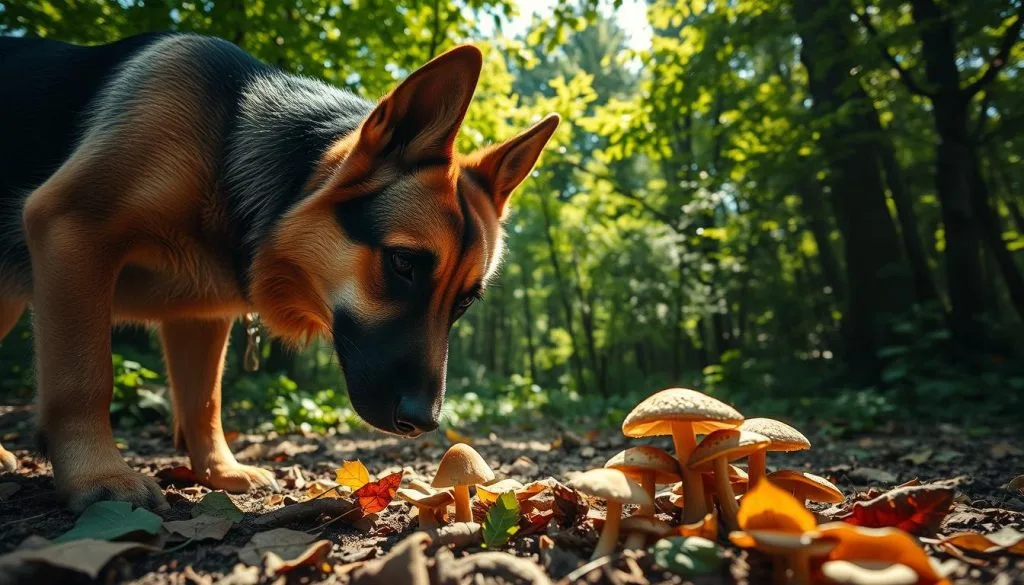
Can Dogs Eat Mushrooms? Safe Types, Toxic Risks & Advice
Your dog sniffs at a mushroom growing in the backyard. Can dogs eat mushrooms, or is this one plant to pull up immediately?
The answer depends entirely on the source. Plain, store-bought mushrooms are generally safe for dogs in small amounts. Wild mushrooms are a completely different story, and some varieties can be fatal.
This isn’t a simple moderation question like berries or peanuts. Knowing the difference between a grocery store mushroom and a backyard one genuinely matters here.
This guide covers safe store-bought varieties, the real danger of wild mushrooms, symptoms to watch for, and what to do in an emergency.
Key Takeaways
- Plain, cooked, store-bought mushrooms are generally safe for dogs in small amounts.
- Wild mushrooms can be severely toxic, and some species are fatal even in small quantities.
- Mushrooms offer little nutritional benefit, so there’s no real reason to feed them regularly.
- Seasonings like garlic, onion, butter, and salt make mushroom dishes unsafe, even when the mushroom itself isn’t.
- Treat any wild mushroom ingestion as a veterinary emergency, even without symptoms.
Can Dogs Eat Mushrooms? (Quick Answer)
Yes and no, depending on the source. Store-bought mushrooms like button, cremini, and portobello are generally safe for dogs in small, plain, cooked amounts.
Wild mushrooms are a different matter entirely. Many species are difficult to identify even for experts, and some are fatal to dogs in small quantities. The safest approach is to treat any wild mushroom as toxic until proven otherwise.
Mushrooms offer dogs little nutritional value either way, so there’s no real downside to simply avoiding them altogether if you’d rather not deal with the guesswork.
Are Mushrooms Good for Dogs?
Not particularly. Store-bought mushrooms aren’t toxic, but they don’t offer much nutritional benefit for dogs either. They contain some fiber and trace nutrients, though nothing a complete dog food doesn’t already provide.
In short, mushrooms are a neutral snack at best — not harmful in the right form, but not something your dog’s diet needs.
Can Dogs Eat Store-Bought Mushrooms?
This is really where can dogs eat mushrooms gets a clear yes. Mushrooms sold for human consumption, such as white button, cremini, portobello, and shiitake, are generally considered safe for dogs in small amounts when served plain.
The bigger risk with store-bought mushrooms usually isn’t the mushroom itself — it’s what they’re cooked with. Butter, oil, garlic, onion, and heavy salt are common additions that turn a safe mushroom into an unsafe dish.
Can Dogs Eat Button Mushrooms?
Yes. White button mushrooms are one of the most common store-bought varieties and are considered safe for dogs when served plain and in small amounts.
Can Dogs Eat Portobello Mushrooms?
Yes. Portobello mushrooms are safe for dogs when washed, served plain, and offered in moderation, following the same rules as other store-bought varieties.
Can Dogs Eat Shiitake Mushrooms?
Yes. Shiitake mushrooms are another store-bought variety generally considered safe for dogs in small, plain amounts.
Can Dogs Eat Cremini Mushrooms?
Yes. Cremini mushrooms, also called baby bella mushrooms, follow the same safety guidance as button and portobello mushrooms. White mushrooms are simply the pale, young version of the same species, and the same rules apply.
Can Dogs Eat Oyster Mushrooms?
Can dogs eat mushrooms beyond the common button and portobello types? Yes. Oyster mushrooms are a common store-bought variety and are generally safe for dogs when served plain and in small amounts.
Can Dogs Eat Enoki Mushrooms?
Yes. Enoki mushrooms are safe in the same small, plain amounts as other store-bought varieties, though their long, thin shape is worth cutting into shorter pieces to reduce choking risk.
Can Dogs Eat Fried Mushrooms?
Not recommended. Frying adds oil and often batter or salt, which can upset a dog’s stomach or contribute to pancreatitis risk. Stick to plain, cooked, or raw store-bought mushrooms instead.
Can Dogs Eat Raw Mushrooms?
Yes, store-bought raw mushrooms that are washed and cut into bite-sized pieces are generally safe. Cooking isn’t required for safety, though some dogs digest cooked mushrooms more easily.
Can Dogs Eat Cooked Mushrooms?
Yes, cooked store-bought mushrooms are safe, as long as they’re prepared plain. Cooking can make mushrooms easier to digest, but it doesn’t make an otherwise unsafe mushroom safe — cooking a toxic wild mushroom does not remove its toxicity.
Can Dogs Eat Canned Mushrooms?
Not recommended. Canned mushrooms are often packed with added salt and sometimes other seasonings that aren’t dog-friendly. Fresh, plain mushrooms are the better choice.
Can Dogs Eat Mushroom Soup, Sauce, or Stock?
No. Mushroom soup, cream sauce, and stock typically contain onion, garlic, butter, cream, and significant sodium, all of which pose their own risks separate from the mushroom itself. Even a stock simmered with onion or garlic can carry enough residue to be a concern.
Can Dogs Eat Morel Mushrooms?
With caution. Morels are sometimes sold commercially, but they must be fully cooked — raw morels are known to cause digestive upset in both humans and dogs. Morels also grow wild and are easily confused with toxic look-alike species, so wild-foraged morels should never be fed to a dog.
Can Dogs Eat Lion’s Mane Mushrooms?
Generally yes, in small amounts. Lion’s mane is increasingly used in pet wellness supplements, and plain, cooked lion’s mane is considered safe for most dogs. As with any supplement, check with your vet before adding it regularly to your dog’s routine.
Can Dogs Eat Turkey Tail Mushrooms?
Generally yes, typically in supplement or extract form rather than as a fresh mushroom. Turkey tail is sometimes used in veterinary-guided wellness protocols, and it’s best introduced under a vet’s direction rather than fed casually.
Can Dogs Eat Wild Mushrooms?
Here’s where can dogs eat mushrooms turns into a hard no. Wild mushrooms should always be treated as a potential emergency. Many toxic species closely resemble harmless ones, making identification unreliable even for experienced foragers.
Why Wild Mushrooms Are So Dangerous
Toxic wild mushroom species can affect the liver, kidneys, nervous system, or digestive tract, depending on the type. Some of the most dangerous species, including death cap and destroying angel mushrooms, contain amatoxins that can cause fatal liver failure, sometimes from a single bite.
Are Mushrooms Toxic to Dogs?
Some are, and some aren’t — the difficulty is that dogs can’t tell the difference, and often neither can their owners. Because the risk of misidentifying a dangerous species is so high, the safest practice is to remove any wild mushrooms from your yard and keep your dog away from areas where they grow.
What Happens If a Dog Eats a Wild Mushroom?
Symptoms vary by mushroom type and can include vomiting, diarrhea, drooling, lethargy, abdominal pain, jaundice, tremors, or seizures. With the most dangerous species, symptoms may not appear for several hours, by which point serious organ damage can already be underway.
If your dog eats any wild mushroom, call your vet or an emergency animal hospital immediately, even if your dog seems completely normal. Try to bring a sample of the mushroom, or a clear photo, since identification can meaningfully guide treatment.
Signs of Mushroom Poisoning in Dogs
Mild Symptoms (More Likely With Store-Bought Mushrooms)
- Mild vomiting
- Loose stool
- Gas
Serious Symptoms (Possible Wild Mushroom Poisoning)
Call your vet immediately if you notice:
- Persistent vomiting or diarrhea
- Drooling or difficulty swallowing
- Lethargy or weakness
- Abdominal pain
- Yellowing of the skin or eyes (jaundice)
- Tremors or seizures
Can Dogs Be Allergic to Mushrooms?
Even after settling can dogs eat mushrooms for most pets, allergies remain a small possibility. It’s uncommon but possible. Watch for itching, hives, swelling, or digestive upset after your dog’s first taste of a store-bought mushroom, and stop feeding it if you notice a reaction.
Can Puppies Eat Mushrooms?
Puppies can have a tiny amount of plain, store-bought mushroom, but there’s little reason to introduce them given the lack of nutritional benefit. Puppies are also more vulnerable to any toxin due to their smaller body size, making prevention around wild mushrooms especially important during this life stage.

How Many Mushrooms Can a Dog Eat?
Once can dogs eat mushrooms is settled, portion size is simple. Since mushrooms offer little nutritional value, less is more here — this isn’t a food to scale up by size the way a protein or fruit treat would be.
Portion Guide by Dog Size
| Dog Size | Weight Range | Portion |
|---|---|---|
| Small | Under 20 lbs | A few small pieces |
| Medium | 20-50 lbs | A few slices |
| Large | 50-90 lbs | A small handful |
| Extra large | 91+ lbs | A modest handful |
These are general estimates, not a fixed veterinary prescription. Since mushrooms aren’t nutritionally necessary, there’s no harm in offering less than these amounts, or skipping them altogether.
How to Safely Feed Mushrooms to Your Dog?
Step 1: Confirm the Source
Only ever use mushrooms purchased from a grocery store, never anything found growing outdoors.
Step 2: Wash Thoroughly
Rinse the mushroom to remove dirt or residue.
Step 3: Serve Plain
Skip butter, oil, salt, garlic, and onion entirely.
Step 4: Cut Into Small Pieces
Offer small, bite-sized pieces suited to your dog’s size, and watch for any reaction the first time.
Alternatives to Feeding Mushrooms to Dogs
Given everything above, can dogs eat mushrooms safely enough to be worth the effort? Not really — plenty of other treats provide more clear benefit:
- Plain, cooked carrots
- Small pieces of plain, cooked chicken
- Blueberries or sliced apple (seeds removed)
The Bottom Line
Can dogs eat mushrooms? Store-bought varieties like button, cremini, and portobello are generally safe in small, plain amounts. Wild mushrooms are an entirely different risk, and some species can be fatal.
Keep your yard clear of wild mushrooms, and if your dog ever eats one outdoors, treat it as an emergency rather than waiting to see what happens.
This article is general information, not a substitute for individual veterinary advice. If your dog eats a wild mushroom or shows any symptoms of poisoning, contact your vet immediately.
Frequently Asked Questions
Can dogs eat mushrooms?
Yes, store-bought mushrooms are generally safe in small, plain amounts, but wild mushrooms can be toxic or fatal.
Are mushrooms good for dogs?
Not particularly. They’re not harmful in the right form, but they don’t offer much nutritional benefit either.
Are mushrooms toxic to dogs?
Some wild species are highly toxic, while common store-bought varieties generally aren’t.
Are mushrooms bad for dogs?
Store-bought mushrooms aren’t bad in moderation. Wild mushrooms can be seriously dangerous and should always be avoided.
Can dogs eat wild mushrooms?
No, wild mushrooms should always be treated as a potential emergency due to the risk of toxic species.
Can dogs eat raw mushrooms?
Yes, store-bought raw mushrooms that are washed and cut into small pieces are generally safe.
What happens if a dog eats a wild mushroom?
Symptoms vary but can include vomiting, lethargy, tremors, or seizures. Call your vet immediately, even without symptoms.
Can puppies eat mushrooms?
Yes, in tiny amounts of plain, store-bought mushroom, though there’s little nutritional reason to do so.
Can dogs eat mushroom sauce or stock?
No, these typically contain onion, garlic, butter, or cream, all separate risks from the mushroom itself.
Can dogs eat enoki mushrooms?
Yes, in small, plain amounts, cut into shorter pieces to reduce choking risk.
Can dogs eat lion’s mane mushrooms?
Generally yes, in small amounts, and it’s increasingly used in vet-guided pet wellness supplements.
Can dogs eat turkey tail mushrooms?
Generally yes, usually in supplement form, and best introduced under veterinary guidance.
Can dogs be allergic to mushrooms?
It’s uncommon but possible. Watch for itching, swelling, or digestive upset after a first taste.
How much mushroom can a dog eat?
This depends on your dog’s size — see the portion guide above, ranging from a few small pieces to a modest handful.